Nature & Smell - How Scent Connects You to Nature and to Yourself

Sabrina Hagen
Do you always smell something before you taste it? Or open a book and breathe it in before you start reading? Scent might be the most underrated sense we have and at the same time the most powerful. Because while you consciously process what you see or hear, smell works quietly. Deeply. Directly. Before your mind even has time to catch up.
Just like the other senses: you pick up scents throughout the day, even when you think you are not smelling anything at all. Subtle or overwhelming, pleasant or uncomfortable. Your nose is always working. And what it picks up touches you more than you might realise.
Scent and Memory — An Inseparable Bond
You know the feeling. You catch a scent and within a fraction of a second you are somewhere else entirely. Your grandmother's perfume. Sunscreen from childhood summers. Freshly baked bread on an ordinary morning. Scent and memory are deeply intertwined — perhaps more than any other sense.
That is not a coincidence. Scent molecules travel directly to the brain, reaching the amygdala, the emotional centre, first. No detour, no rational filter. Just straight there. That is why a scent can be so precise, so unexpected, so physical.
"Smell can instantly trigger an emotional response along with a memory, and our emotional states have a very strong effect on our physical well-being."
Research shows that scents evoking personal memories not only improve mood, they also promote slower and deeper breathing, and measurably reduce markers of inflammation in the body. Scent heals. Literally.
And the scents that do this most powerfully? Those of nature.
Nature as Free Aromatherapy
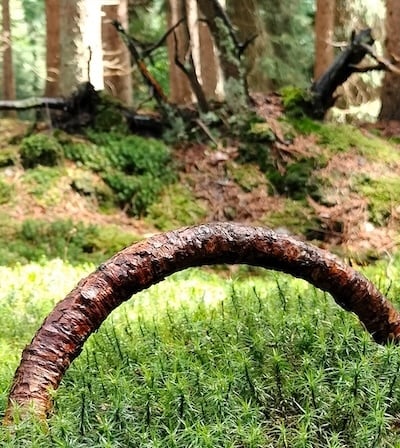
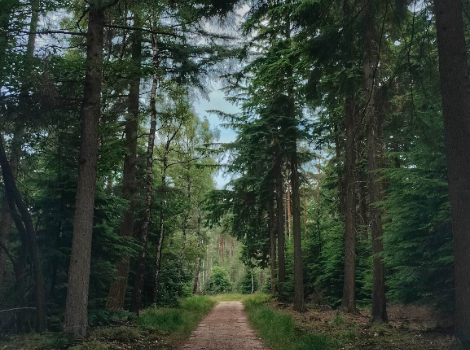
Walking into a forest. Pine trees after the rain. Lavender in the summer sun. Freshly cut grass. Take a moment to bring those to mind. What do you notice in your body when you remember them?
Trees and plants naturally release phytoncides, natural substances they produce to protect themselves against bacteria and fungi. But what they do for us is equally remarkable. When you breathe in a forest, you breathe in those compounds. Your immune system strengthens, your stress hormones drop, your blood pressure lowers. This is the science behind Shinrin Yoku, forest bathing and it works.
The beautiful thing is: it is completely free. Nothing to buy, nothing to book. Just go outside. Breathe. Be present.
Aromatherapy works in the same way, but consciously and concentrated. Essential oils, distilled from herbs, flowers, and plants, follow the same route as natural scents: directly to the brain. Lavender for calm. Peppermint for focus. Eucalyptus for space. Rosemary for clarity. Nature has always had a pharmacy waiting for us, we just forgot it was there.
We Have a Scent Too — and That Connects Us
And then there is something I find truly fascinating. Something that connects us perhaps most deeply to the rest of nature. Because we have a scent too.
Humans produce pheromones. Mostly odourless themselves, but mixed with our own natural scent they become a kind of fingerprint. Unique, unconscious, powerful. They influence attraction, mood, and social dynamics. We sometimes think we are so far removed from nature, but our bodies are still communicating in the same way as insects, plants, and animals.
A ladybug can attract others of its kind from over 400 metres away using pheromones. Ants lay scent trails to food. Trees warn each other through fungal networks in the soil when danger is near. And us? We are drawn to people whose genetic makeup complements our own, through scent, without even knowing it.
Nature is in constant communication. So are we. We are not separate from that nature, we are part of it. And scent is one of the languages that reminds us of that most directly.
Where to Start
You do not need a bottle of essential oil or a forest nearby to begin. Start small. Start today.
Smell your cup of tea consciously before you drink it. Step outside and take three slow, deep breaths. Put a sprig of rosemary or a bunch of lavender on your desk. Go for a short walk through a park and pay attention to what you smell, not what you see.
And notice what happens. In your body. In your breathing. In your mind.
Scent is not without reason one of the senses I bring into my sessions. It opens something. It calms. It brings you back into the moment, and into connection with the nature around you and the nature within you.
Would you like to learn how to use your senses more consciously in daily life? Come for a session.